
Making Performance Reviews Meaningful: Why the best conversations don’t happen once a year.
Most organisations still run performance reviews the same way: once a year, on a form, with a rating at the end. And most managers and employees quietly agree the process doesn't work. It's rarely the review itself that's the problem. It's the twelve months of silence that come before it.
A performance review is meant to be a checkpoint. Somewhere along the way it became the entire system: the one moment expectations get set, feedback finally lands, and development gets discussed, all at once, once a year. That's not a review. That's a backlog.
The Weekly Feedback Gap
Gallup research puts a number on it: employees who get feedback from their manager weekly or more are engaged at roughly 48%, compared with just 5% among employees who get feedback annually or less. That gap comes from everything that isn't happening between reviews, not from the review meeting itself. (Gallup, 2024)
Managers save up feedback for the review because it feels like the "official" moment to give it, so small issues go unaddressed until they're big ones. Employees are surprised by a rating that doesn't match what they thought was going well. And because so much rides on one conversation, both sides go in guarded rather than open.
Focusing on the Other 51 Weeks
Our approach doesn't start with redesigning the form. We start with what's happening the other 51 weeks of the year: whether managers are having regular, low-stakes conversations about expectations and progress, and whether the annual review is actually just confirming what's already been said, rather than delivering it for the first time. When that shift happens, the review stops being the mechanism and starts being the record.
Building a Regular Habit
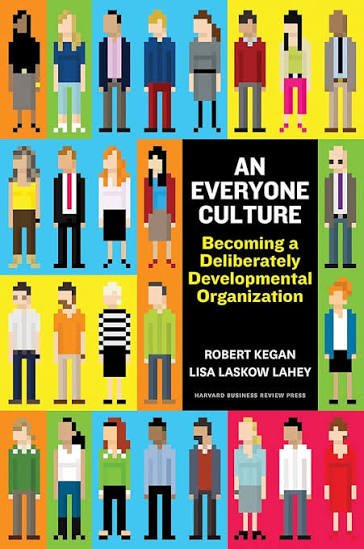
An Everyone Culture: Becoming a Deliberately Developmental Organisation by Robert Kegan & Lisa Lahey
One HMNKND client set out to become what Robert Kegan and Lisa Lahey call a deliberately developmental organisation in their book An Everyone Culture: one where growth and feedback are built into the operating rhythm, not bolted on once a year. They replaced the annual review with a quarterly check-in cycle. Each quarter, employees worked through a set of self-reflection questions before sitting down with their manager to talk it through. The questions themselves changed every quarter, so the exercise stayed genuine rather than turning into a script employees could complete on autopilot. At the mid-year and end-of-year check-ins, they added a 360-style layer: each employee nominated two colleagues who'd worked closely with them to contribute a different perspective on their performance, widening the picture beyond their manager's view alone.
Alongside the formal cycle, they used Culture Amp to make feedback available in real time. Employees could send or request it from peers and managers whenever it was useful, not just when the calendar said so, and that feedback fed into a dashboard managers could draw on during the quarterly conversations, so those check-ins were grounded in what had actually been happening rather than reconstructed from memory months later. The habit stuck across the organisation, not because the software forced it, but because the quarterly rhythm had already made frequent feedback feel normal.
Rebuilding the Everyday Rhythm
If your performance process feels like it's causing more anxiety than clarity, it's worth looking at what's happening in the gaps between reviews, not just the review itself. Our People Projects service is built around exactly this kind of practical, embedded work: rebuilding the everyday rhythm that makes the annual conversation almost unnecessary.
If you'd like to talk through what that could look like for your team, get in touch, or read our related piece on workplace culture for how these everyday moments shape more than just performance.